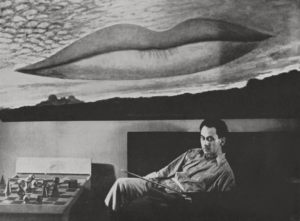
“Man Ray,” the poet André Breton once said, “is the quintessential modern artist — free, inventive, and forever unclassifiable.” That slipperiness is exactly what the Metropolitan Museum of Art’s exhibition Man Ray: When Objects Dream brings into focus. Rather than slotting the artist neatly into the canon of Dada or Surrealism, the show positions him as inhabiting a space of uncertainty.
Now on view through February 1, 2026, the Met’s Man Ray exhibition is the first to situate his celebrated rayographs within the larger arc of his work from the 1910s and 1920s. Drawing from the institution’s collection and more than 50 international lenders, the exhibition assembles around 60 rayographs and 100 paintings, objects, prints, drawings, films, and photographs. Seen together, these works reposition the rayograph not as a curious side note but as a central force in Man Ray’s refusal to be bound by categories, and as a key to understanding the fertile “blur” through which he redefined modernism itself.